


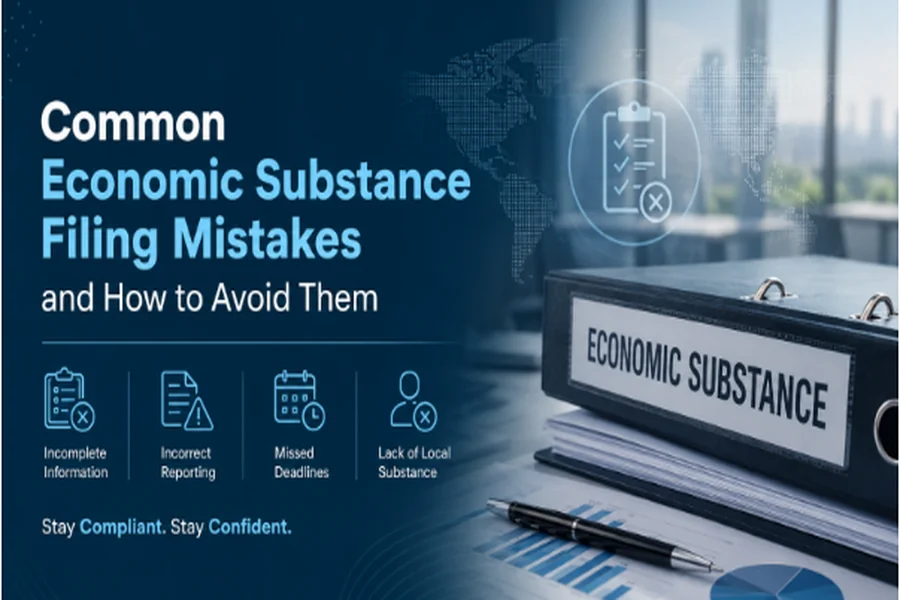
Economic Substance filings can go wrong long before a return is submitted. An incorrect activity classification, the wrong financial period, or unsupported information in the return can create problems even when the filing is made on time.
For Cayman entities, the safest approach is to treat Economic Substance as an annual review rather than a year-end formality. A few checks early in the process can prevent corrections, penalties, and unnecessary questions from the authorities later.
Misclassifying the Entity or Its Relevant Activity
An entity needs to determine whether it is a Relevant Entity, whether an exclusion applies, and whether it carries on one or more Relevant Activities. That assessment should be based on what the entity actually does during the reporting period.
For example, a Cayman foundation company should not be classified solely by its legal structure. Its activities, income, and any available exclusions still need to be reviewed.
Classification also needs to be reconsidered when the business changes. A company that was only holding investments in one year may start providing group services or financing in the next, which can change its Economic Substance position.
Treating Zero Income as No Relevant Activity
Another common error is assuming that an entity has no Relevant Activity simply because it earned no Relevant Income during the year.
The two questions are separate.
If an entity carries on a Relevant Activity, that activity should still be identified in its Economic Substance Notification. The income position is then dealt with when preparing the Economic Substance Return.
This distinction matters because an incorrect answer at the notification stage can affect the reporting that follows.
Using the Wrong Financial Period
Economic Substance reporting is based on the entity’s financial year, not automatically on the calendar year. That sounds simple, but it can create mistakes where a company has a non-calendar financial period. An entity with a financial year running from 1 April to 31 March should not prepare its return as though the reporting period runs from January to December.
Before preparing the filing, confirm the entity’s financial year against its accounting records and previous submissions.
Reporting Only One Relevant Activity
A company might, for example, provide services to overseas group companies while also carrying on financing activities. Each activity needs to be considered separately, and separate reporting may be required.
The safest approach is to review the entity’s income streams, agreements, and actual business functions before deciding how many activities need to be reported.
Claiming Overseas Tax Residence Without Evidence
An entity may be outside the Relevant Entity definition where it qualifies as tax resident in another jurisdiction, but the position needs to be supported.
Evidence can include documents such as a tax residence certificate, tax identification details, tax assessments, or proof of corporate income tax payments, depending on the circumstances.
Relying on an overseas tax-residence position without having the supporting documents ready can create avoidable issues during review.
Filing Information That Does Not Match the Records
The Economic Substance Return should reflect the entity’s actual financial and operational position.
Information about Relevant Income, expenditure, employees, premises, Core Income Generating Activities, and outsourced functions should be consistent with the entity’s financial statements and corporate records.
A good internal check is to reconcile the return against the underlying accounts before submission. This is particularly useful when reviewing compliance with the Cayman economic substance requirements, where the filing may need to support both the activity classification and the substance maintained in Cayman.
Leaving Preparation Until the Deadline
An Economic Substance Return is generally due within 12 months after the end of the relevant financial year.
Late filing can attract an initial CI$5,000 penalty, followed by CI$500 for each additional day the failure continues. Preparing the return only when the deadline is close also leaves little time to correct classification issues or obtain missing evidence.
A better process is to gather the supporting information well before the filing date.
A Better Filing Routine
A simple annual review can reduce many of these risks:
Reconfirm the entity’s classification and Relevant Activities
Check the correct financial period
Review whether more than one activity needs reporting
Gather evidence for any tax-residence claim
Reconcile the return against financial and corporate records
Track the filing date in advance
HCS Offshore can assist with Economic Substance assessments and returns, annual filings, Beneficial Ownership obligations, CRS and FATCA filings, and continuing compliance monitoring. Reviewing these requirements together can help keep the entity’s records and regulatory filings consistent throughout the year.
