


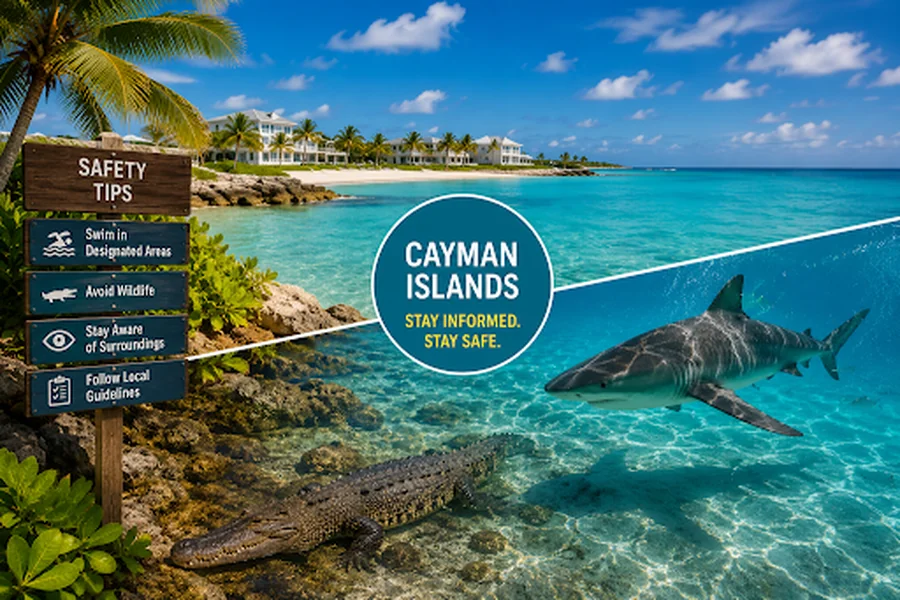
The name “Cayman” is believed to have come from an Indigenous Caribbean word used for crocodilians. That history can make first-time visitors wonder what may be living beyond the shoreline.
The practical answer is less dramatic. Sharks are part of Cayman’s marine environment, while crocodiles are not commonly found around the islands today. Encounters with either animal are unusual for most visitors, especially around popular beaches.
Understanding what lives here, and knowing how to respond calmly, makes far more sense than avoiding the water out of fear.
Are There Crocodiles in the Cayman Islands?
American and Cuban crocodiles once lived in the Cayman Islands. They later disappeared from the local environment, and there is no established wild population around the islands today.
An individual crocodile may occasionally arrive by sea from another part of the Caribbean. These cases are rare and usually attract immediate public attention.
Searching for information about a Cayman Islands crocodile may bring up reports of isolated sightings, but those stories should not be mistaken for evidence that crocodiles regularly live near tourist beaches.
Still, any unfamiliar wildlife should be treated carefully. If you believe you have seen a crocodile:
- Leave the water without splashing or approaching the animal.
- Keep children and pets away from the area.
- Do not feed, corner or attempt to photograph it from close range.
- Contact the Cayman Islands Department of Environment or local authorities.
- Allow the animal a clear route away from people.
Crocodile incidents are rare, and dangerous encounters are more likely when people try to capture, provoke or interfere with the animal.
Do Sharks Live in Cayman Waters?
Sharks are a natural part of Cayman’s marine ecosystem. Several species have been recorded around the islands, including nurse sharks, Caribbean reef sharks and hammerheads. Local shark populations are relatively small, and seeing one while snorkelling or diving is often considered a memorable wildlife encounter.
Most beach visitors will not see a shark at all.
Nurse sharks are among the species divers and snorkellers are more likely to encounter. They often rest near reefs or sandy areas and usually show little interest in people. Caribbean reef sharks may also be seen farther offshore, particularly during organised dives.
What Should You Do If You See a Shark?
A shark sighting does not require panic. Sudden movements, chasing or crowding the animal can make the situation less predictable.
Stay calm and keep the shark in sight. Give it plenty of room and move steadily toward the shore or boat if you no longer feel comfortable.
Do not:
- Swim toward the shark for a photograph.
- Touch or attempt to ride it.
- Feed it or throw food into the water.
- Block its swimming path.
- Continue an encounter after a guide asks you to move away.
Follow the instructions of your dive guide, boat crew or tour operator. Experienced local teams understand the conditions and know how to manage wildlife sightings safely.
Shark feeding is prohibited in Cayman waters because it can change natural behaviour. When sharks begin associating boats or people with food, they may approach more closely than they otherwise would.
Are Cayman Beaches Safe for Swimming?
Popular Cayman beaches are generally considered safe for swimming, but daily conditions matter more than wildlife sightings. Check the marine forecast before entering the water. Wind, waves, currents and visibility can change from one side of the island to another.
Stay close to shore when swimming with children or inexperienced swimmers. Avoid entering rough water, do not swim alone in unfamiliar areas and pay attention to instructions from local operators.
See These Animals in a Managed Setting
Visitors who would prefer to observe these animals in a controlled environment can visit Cayman Turtle Centre. The Centre is home to Smiley, a rescued hybrid crocodile housed in a secure habitat. Visitors can also observe nurse sharks and other marine animals at Predator Reef through an underwater viewing panel.
A visit to a wildlife conservation center in Cayman gives families a chance to learn how these animals behave, why they matter to the environment and why keeping a respectful distance is so important.
Final Thoughts
Crocodiles are not a normal feature of Cayman’s tourist beaches, while sharks are present but rarely encountered by casual swimmers.
Neither animal should be approached, fed or treated as a photo opportunity.
Listen to local guidance, check sea conditions and allow wildlife to move freely. Cayman’s waters are memorable because they remain part of a living ecosystem. Visitors can enjoy them safely by bringing curiosity, good judgement and respect into the water.
