


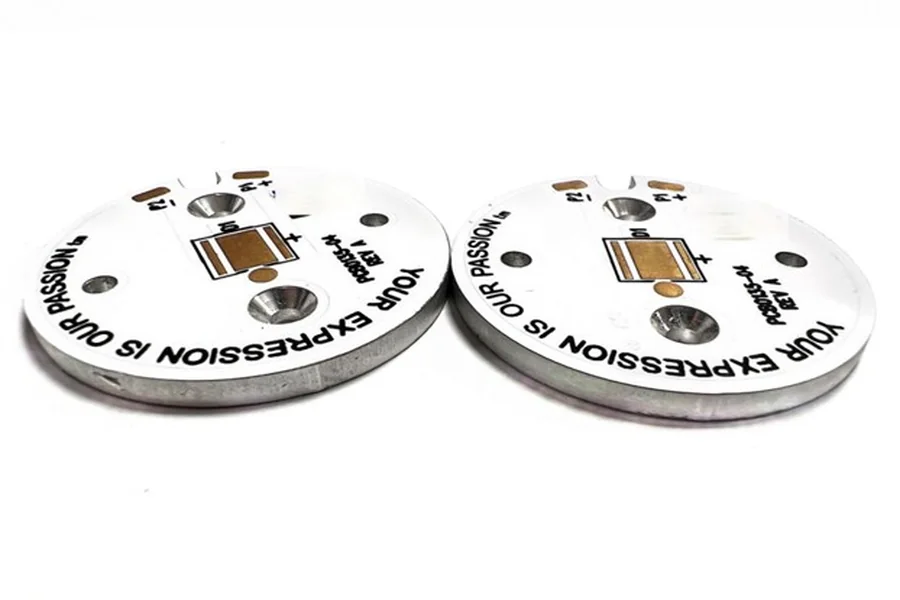
The growing demand for efficient thermal management and high-performance electronics has led to the development of advanced printed circuit board technologies. Among them, the aluminum circuit board has emerged as a highly effective solution for applications that generate significant heat. Unlike traditional FR4 boards, aluminum PCBs offer excellent heat dissipation, mechanical durability, and long-term reliability, making them the preferred choice for industries such as automotive, LED lighting, power supplies, and consumer electronics.
What is an Aluminum Circuit Board?
An aluminum circuit board is a type of metal-based PCB where the base material is aluminum instead of the standard fiberglass used in conventional PCBs. The typical structure of an aluminum PCB includes three main layers: the copper layer for conductivity, the dielectric insulation layer for electrical isolation and heat transfer, and the aluminum base layer that provides mechanical strength and superior heat dissipation.
This unique construction allows aluminum circuit boards to handle higher levels of heat without compromising performance, which is why they are widely used in high-power and high-intensity applications.
Key Features of Aluminum Circuit Board
One of the most significant features of the aluminum circuit board is its ability to conduct heat away from critical components. This makes it ideal for applications where maintaining low operating temperatures is essential for longevity and efficiency.
Aluminum PCBs also provide improved mechanical stability compared to traditional boards. Their rigid base makes them less prone to warping, bending, or breaking. Additionally, they are lightweight, cost-effective, and environmentally friendly, as aluminum is recyclable.
Advantages of Aluminum Circuit Board
The aluminum circuit board offers several advantages that set it apart from other types of PCBs. Its superior thermal conductivity ensures that heat generated by components like LEDs or power transistors is efficiently transferred to the aluminum base, reducing the risk of overheating. This results in longer component lifespan and improved overall system reliability.
Another advantage is their dimensional stability, as aluminum PCBs remain stable even under high mechanical and thermal stress. They also support high-current and high-power applications, making them suitable for use in industrial and automotive systems. Furthermore, aluminum circuit boards can be easily integrated into designs that require compact layouts without sacrificing performance.
Applications of Aluminum Circuit Board
The aluminum circuit board is widely used across multiple industries. In LED lighting, it plays a crucial role in maintaining brightness and efficiency by preventing LEDs from overheating. Automotive manufacturers use aluminum PCBs in headlights, brake lights, and power control units due to their ability to withstand harsh operating conditions.
In the power electronics sector, aluminum PCBs are used in power converters, rectifiers, and high-current regulators. They are also found in consumer electronics such as audio systems, communication equipment, and computer power supplies. The aerospace and defense industries further rely on aluminum PCBs for applications that demand durability and consistent performance under extreme conditions.
Types of Aluminum Circuit Board
Aluminum PCBs come in different variations depending on the application. The most common type is the single-layer aluminum PCB, which consists of one copper conductive layer bonded to the aluminum base. These are widely used in LED products and basic power modules.
For more complex designs, multi-layer aluminum PCBs are used, which involve multiple layers of dielectric and copper stacked over an aluminum base. Another variation is hybrid aluminum PCBs, where different materials such as FR4 are combined with aluminum to balance cost and performance for specific applications.
Manufacturing Process of Aluminum Circuit Board
The production of an aluminum circuit board involves several precise steps. The process starts with laminating the copper foil to the dielectric layer and then bonding it to the aluminum substrate. The copper layer is etched to form the required circuit patterns, followed by drilling for mounting components.
A dielectric material with high thermal conductivity is applied to ensure efficient heat transfer. Surface finishes such as HASL (Hot Air Solder Leveling), ENIG (Electroless Nickel Immersion Gold), or OSP (Organic Solderability Preservatives) are then used to improve solderability and prevent oxidation. Finally, rigorous testing is conducted to ensure the board meets performance and reliability standards.
Design Considerations for Aluminum Circuit Board
When designing an aluminum circuit board, engineers must focus on thermal management to optimize performance. The thickness of the dielectric layer plays a critical role, as it must be thin enough to transfer heat effectively but thick enough to provide electrical insulation. The choice of surface finish also impacts soldering quality and durability.
Additionally, designers must carefully plan trace routing to minimize resistance and maximize current-carrying capacity. Since aluminum is conductive, proper insulation and layer bonding are essential to prevent short circuits.
Conclusion
The aluminum circuit board is a vital solution for modern electronics where heat dissipation and reliability are critical. With its excellent thermal performance, durability, and cost-effectiveness, it continues to be the go-to choice for industries such as LED lighting, automotive, aerospace, and power electronics. As technology advances and demand for high-performance devices grows, aluminum PCBs will remain central to innovation and efficiency. To achieve the best results, partnering with an experienced and reliable aluminum circuit board manufacturer is essential, ensuring your projects benefit from precision engineering, high-quality materials, and optimized performance.
