


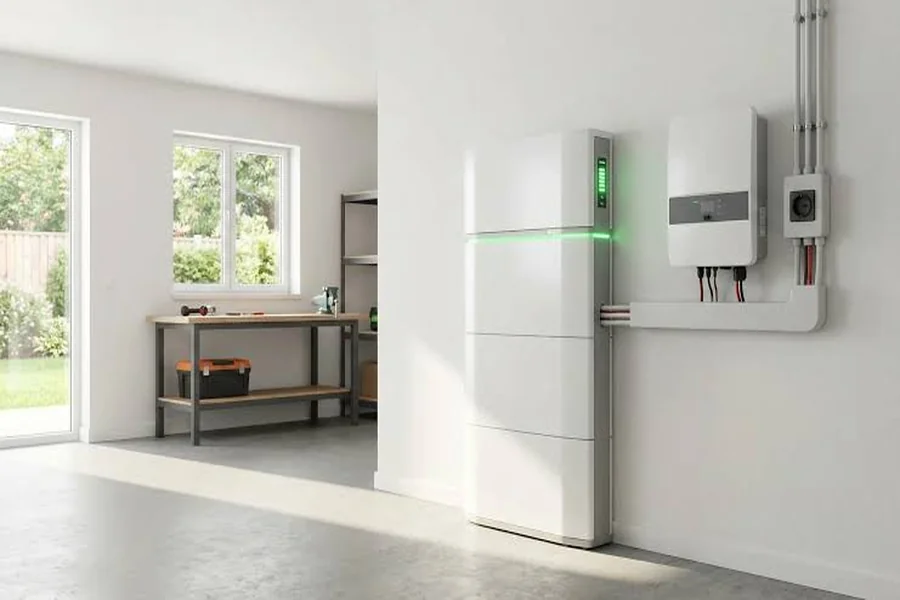
For UK households, home battery storage is becoming less about simply storing surplus solar power and more about controlling when and how electricity is used. The combination of rooftop solar, smart tariffs, electric vehicles, heat pumps and intelligent energy management is creating a more flexible home energy system.
The UK market is already moving in this direction. Government data estimates that Great Britain had around 1.6 GWh of home battery capacity across approximately 299,000 households, while the Warm Homes Plan places solar panels, batteries and other clean energy technologies at the centre of household energy upgrades.
But choosing a battery is not simply a question of buying the largest capacity available. The right solar storage solution depends on your existing solar installation, electricity consumption, available space, tariff, and how much flexibility you want in the future.
What Has Changed in Home Battery Storage in 2026?
Modern home energy storage systems are increasingly designed around three priorities: safety, usable capacity and intelligent energy management.
Battery technology has become more sophisticated, while energy management systems can coordinate solar generation, battery charging, household demand and grid electricity. This matters because a battery is most valuable when it is used strategically rather than simply charged whenever solar generation is available.
The UK’s policy direction also supports greater flexibility. Government measures are encouraging smart energy technologies that can respond to different electricity tariffs, allowing households to make better use of cheaper periods of electricity.
For consumers, this means the best home battery in 2026 is not necessarily the one with the biggest battery. It is the system that fits your daily energy profile and can intelligently respond to it.
DC Coupling vs AC Coupling: Which Is Better?
One of the most important decisions is whether to choose a DC coupled or AC coupled system.
DC Coupled Storage
In a traditional DC coupled configuration, solar panels and the battery are connected on the DC side before electricity is converted into AC for household use.
This can be particularly attractive when installing solar panels and battery storage together. Because the energy conversion path can be relatively direct, DC coupling can provide an efficient solution for a new solar installation.
However, it can be less convenient when you already have an operational solar PV system with its own inverter. Retrofitting a DC battery may require changes to the existing system.
AC Coupling Battery
An AC Coupling battery connects to the AC side of the household electrical system. This makes AC coupling particularly interesting for homeowners who already have solar panels and want to add storage without replacing their existing solar inverter.
The flexibility is one of its biggest advantages.
For example, imagine a household that installed solar several years ago. The panels are still performing well, but daytime generation exceeds household demand. Instead of exporting all surplus electricity, an AC coupled battery can provide a route to store energy for later use, subject to the specific system design and installation requirements.
This makes AC coupling worth considering for solar upgrades, retrofits and households that want greater flexibility.
For homeowners looking for this type of solution, Conow’s Atlas 6000 AC is designed around AC coupling, with a 6 kWh battery, 3,000 W inverter and intelligent energy management capabilities. Its positioning makes it particularly relevant to households looking to add meaningful storage capacity to an existing solar setup.
The choice should therefore be based on your starting point: DC coupling can be attractive for a new integrated solar installation, while AC coupling can offer a practical route for expanding an existing system.
Large Home Battery or Compact Balcony Storage?
Capacity is another major decision.
A conventional whole home home battery storage system can make sense for households with relatively high electricity consumption, rooftop solar and multiple large electrical loads. This could include an EV charger, heat pump, electric heating or a larger family household.
However, bigger is not automatically better.
If your household uses relatively little electricity, an oversized battery may spend much of its time underutilised. A smaller system can sometimes provide a better balance between upfront cost and usable energy.
This is where compact solar storage systems become interesting.
For apartments, smaller homes or households with limited installation space, a modular system such as Conow’s Lyra 2500 Pro can provide a more flexible approach. It has a 2.56 kWh battery, a 1,500 W bidirectional inverter and supports up to 2,400 W of PV input. Its capacity can also be expanded to 5.12 kWh.
This type of system can suit users who want to increase solar self consumption without immediately investing in a large whole home battery.
Five Things to Check Before Buying
1. Battery Capacity: kWh
Battery capacity tells you how much energy the battery can store.
A 5 kWh battery does not necessarily mean you will get 5 kWh of usable energy every day. Look at usable capacity, operating limits and the manufacturer’s specifications rather than comparing headline capacity alone.
Review your electricity consumption first. Your smart meter data can show when you use electricity and how much you consume overnight.
2. Power Output: kW
Capacity and power are different.
A battery with 10 kWh of storage may still have a relatively modest power output. If you want to run several high demand appliances simultaneously, inverter power becomes important.
Consider your peak loads, particularly if you have an EV charger, induction hob, heat pump or electric heating.
3. Battery Life and Warranty
Do not look only at the advertised number of charge cycles.
Check the warranty period, expected retained capacity, operating conditions and whether the warranty covers the complete system or only the battery cells.
A reputable supplier should clearly explain what happens if performance falls below the specified level.
4. Energy Management Software
A battery without intelligent control can miss much of the value of modern energy storage.
Look for an app that allows you to monitor generation, consumption, battery state of charge and grid imports. More advanced systems can also optimise charging and discharging according to electricity prices.
This becomes increasingly important as UK households adopt time of use tariffs and flexible energy consumption.
5. Installer, Certification and Grid Requirements
The battery itself is only one part of the project.
For UK installations, consumers should check the installer credentials, electrical requirements, product documentation, warranty and relevant DNO notification requirements. Government guidance states that energy device installations may need notification to the Distribution Network Operator, and MCS certified installers have specific registration responsibilities.
If you want to benefit from the Smart Export Guarantee, eligibility and installation requirements should also be checked with your chosen supplier and installer. Ofgem confirms that SEG allows eligible small scale low carbon generators to receive payments for electricity exported to the grid.
The tax position is also worth considering. Domestic batteries are currently covered by the UK’s VAT relief for qualifying energy saving installations, with government material noting that the relief is available until March 2027. Always confirm the treatment applicable to your specific installation and quotation.
Build a Home Energy System Around Your Needs
The best home battery is ultimately not the biggest or most expensive model. It is the one that matches your electricity consumption, solar generation and future plans.
For a new solar installation with substantial household demand, a larger DC coupled system may make sense. For an existing PV system that needs additional storage, an AC Coupling battery can offer greater retrofit flexibility. For apartments and smaller households, a compact modular solar storage system may provide a more proportionate investment.
Products such as Conow’s Lyra 2500 Pro and Atlas 6000 AC illustrate two different approaches: one focuses on compact, expandable energy storage, while the other provides larger AC coupled capacity for households looking to integrate storage into an existing energy setup.
Before buying, start with your electricity data rather than a product catalogue. Understand your daily consumption, identify your peak demand, estimate how much solar energy you currently export, and consider how an EV, heat pump or time of use tariff could change your future requirements.
The goal is not simply to store more electricity. It is to use more of the energy you generate, buy grid electricity more intelligently, and create a flexible household energy system that can adapt as your needs change.
In 2026, that is what makes solar storage a genuinely useful part of a smarter and more resilient UK home energy strategy.
